



MySQL Functions

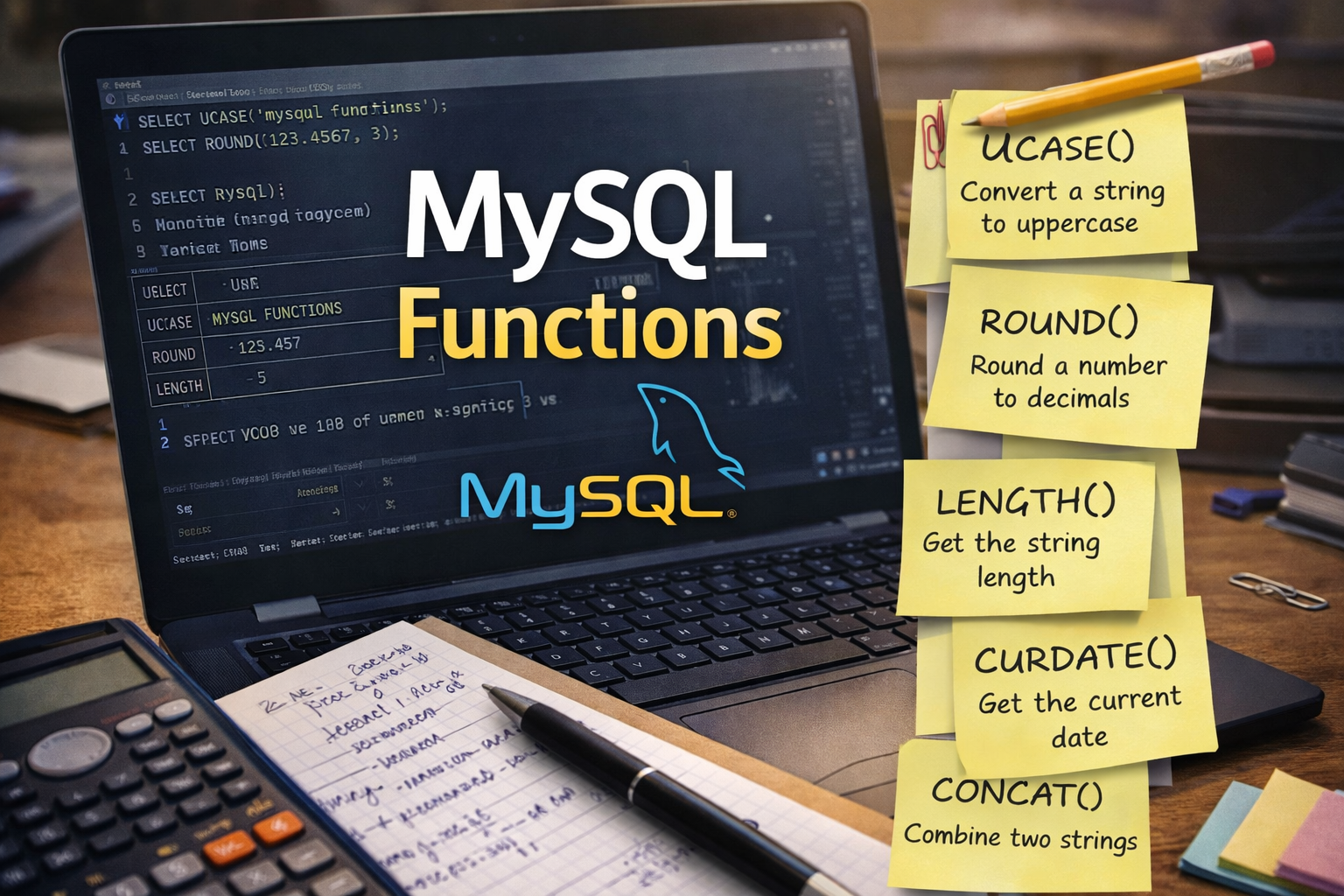
MySQL Functions Functions are used to perform some specific task. Every functions has a particular pre-defined tasks. functions are categorized into two parts. 1. Single Row Functions These functions operates on a single row at a time. These functions are categorized into following parts- i. Math Functions ii. String Functions iii. Date and Time functions…

Read More

SQL Joins

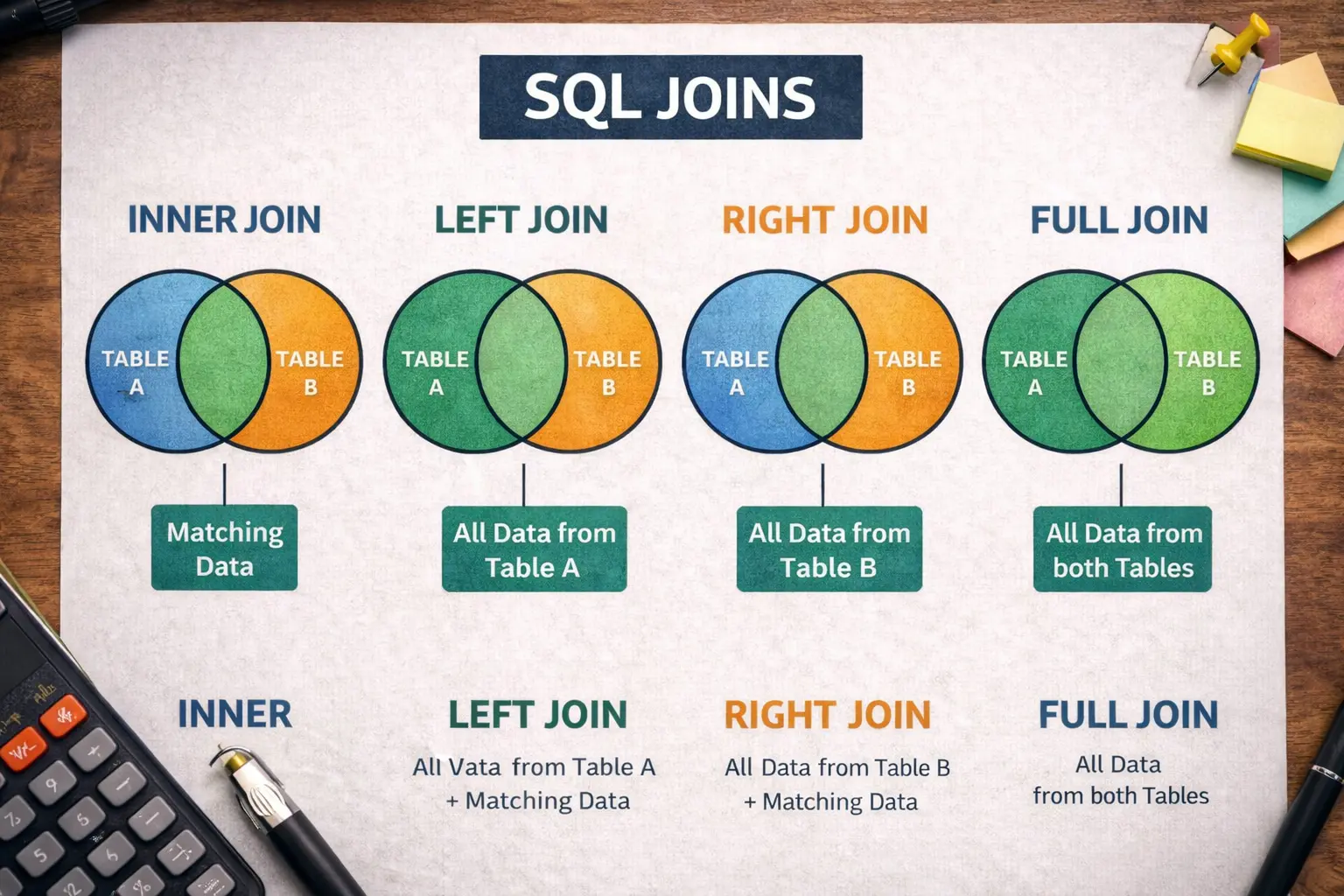
 JOIN Joins are used to extract data from one or more tables. There are different types of Joins in MySql. Let’s learn about them. 1. CROSS JOIN CROSS JOIN returns the Cartesian product of two tables. Every row of table1 is combined with every row of table2.              Example-  …

Read More

Basic SQL Commands

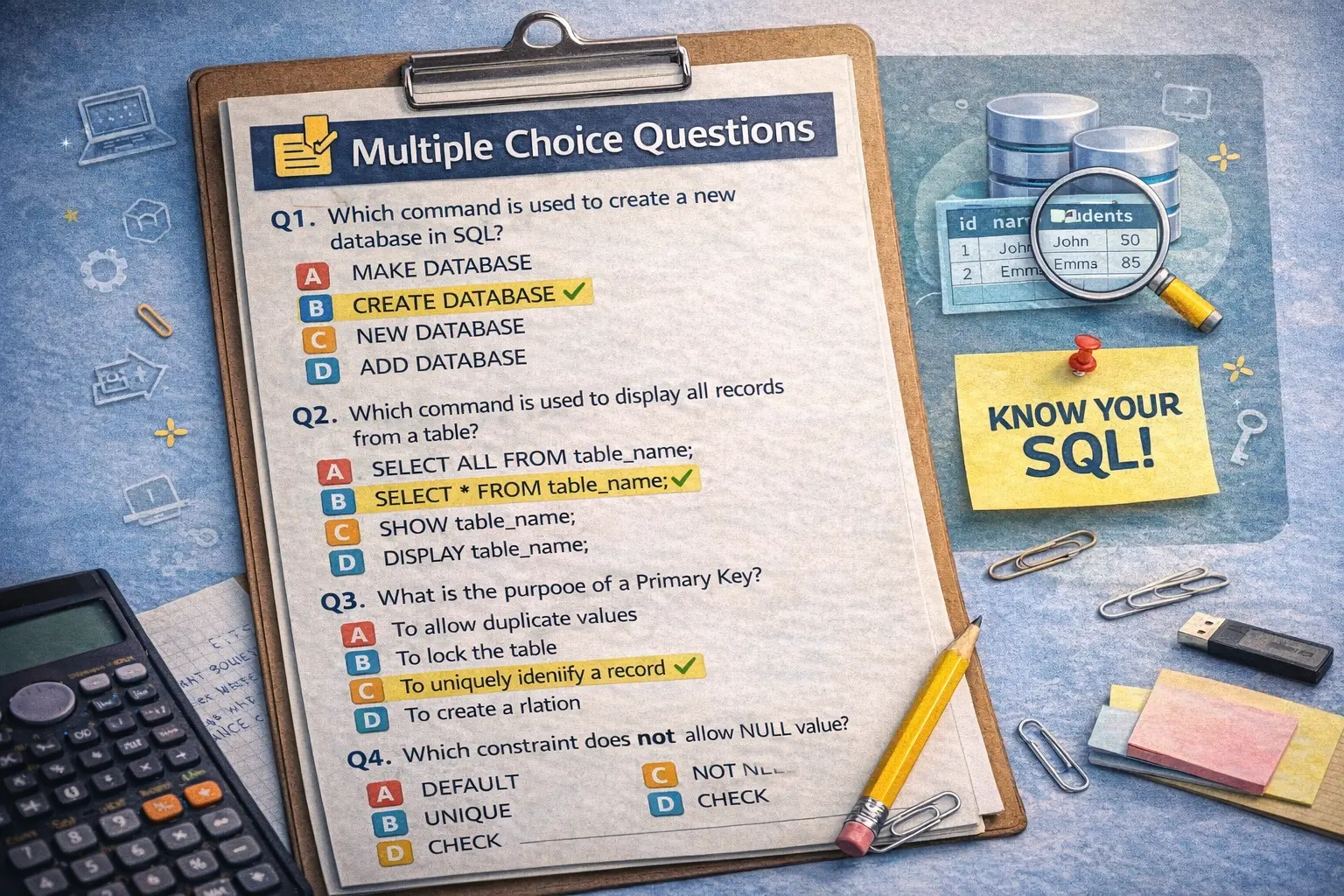
1. CREATE DATABASE It is used to create a new database. Syntax: CREATE DATABASE database_name; Example:      CREATE DATABASE school; 2. USE It is used to select a database before performing any operation. Syntax: USE database_name; Ex.-    USE school; 3. CREATE TABLE It is used to create a new table inside a database….

Read More

Components of DBMS

1.Primary Key Uniquely identifies each record in a table. Cannot contain NULL values. Each table can have only one primary key. Example: Roll no., Aadhar no. etc. 2.Candidate Key All attributes that can uniquely identify a record. From these, one key is chosen as the Primary Key. Example: Roll_No, Aadhar_No, and Email can all uniquely…

Read More

Types of Database Models

Here are the examples of different types of DBMS. 1. Hierarchical DBMS (Tree Structure) Structure: Data stored in a tree-like structure (Parent → Child relationship). Each child has only one parent, but one parent can have many children. Example: Windows Registry IBM Information Management System (IMS) Organization structure example– Principal ├── Teacher │ ├── Student1…

Read More

DBMS-MySQL

   DBMS (Database Management System)      1. Introduction DBMS stands for Database Management System. It is used to store, manage, and retrieve data efficiently. Example: MySQL, Oracle, SQL Server, MS Access, PostgreSQL.      2. Database A database is a collection of related data. It stores data in an organized form (tables). Example: A…

Read More